
Everyone wants a chatbot until they get one. Then they realize it just answers questions and hands the work back to a human. The customer still has to call, the appointment still has to be booked by someone, and the lead still has to be entered by hand. The chatbot was a receptionist who can only talk.
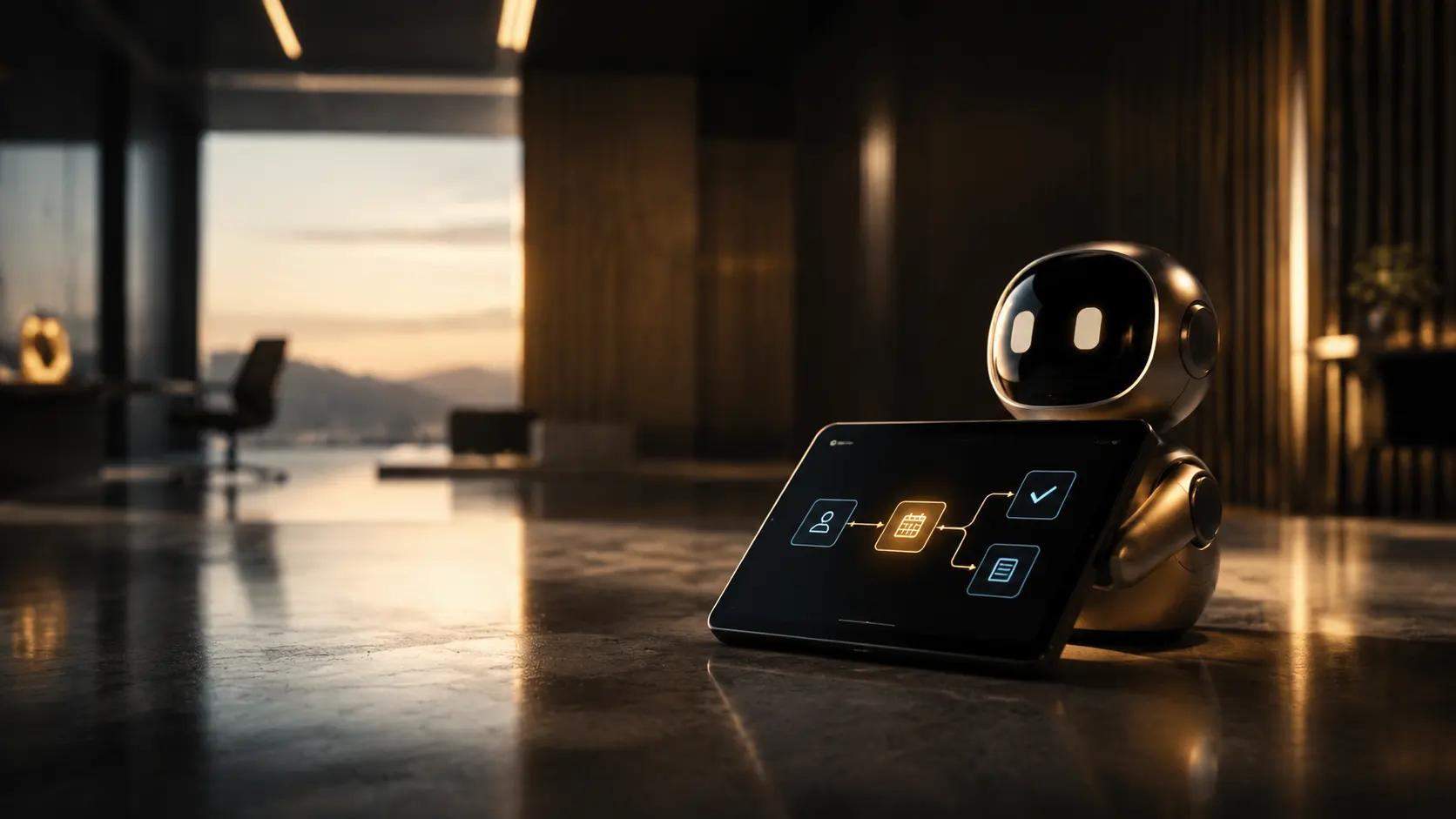
An AI agent is different. It does not just answer, it acts. It books the appointment, creates the contact, triggers the follow-up, and only taps a human when one is genuinely needed. That gap, between talking and doing, is the whole story of business automation in 2026.
01 · Chatbot vs agent, the real distinction
The words get used interchangeably, but they are not the same thing. The difference is connection. A chatbot lives in a chat window. An agent reaches into your calendar, your CRM, and your messaging to complete the task end to end.
The customer experience is the proof. With a chatbot, the conversation ends with someone will get back to you. With an agent, it ends with you are booked for Thursday at 3, here is your confirmation. One creates a task. The other closes the loop.
02 · Where agents actually move the needle
Not every task should be handed to an agent. The wins come from the high-volume, repetitive, after-hours work that currently leaks leads and eats your team's time.
03 · How to deploy one that works
A badly scoped agent frustrates the customers you worked to attract. A well-scoped one becomes a team member. The difference is in the setup, not the technology.
04 · The receptionist who never sleeps (a conversation from our kitchen table)
The fear we hear most is that an agent will feel cold or replace people. The reality is the opposite when it is built right.
Sources
MIT and Harvard Business Review, Lead Response Management Study (analysis of 2,241 companies). Lead Response benchmarks (2026).